
second explains a defensible sequence. Neither a thermal camera nor a basic moisture meter identifies mold species or establishes a health diagnosis. If the property has an odor, staining, or a known leak history, provide that information when arranging the STS buyer inspection. A scan is more useful when it is connected to a specific concern and accessible evidence.
Insulation and air movement
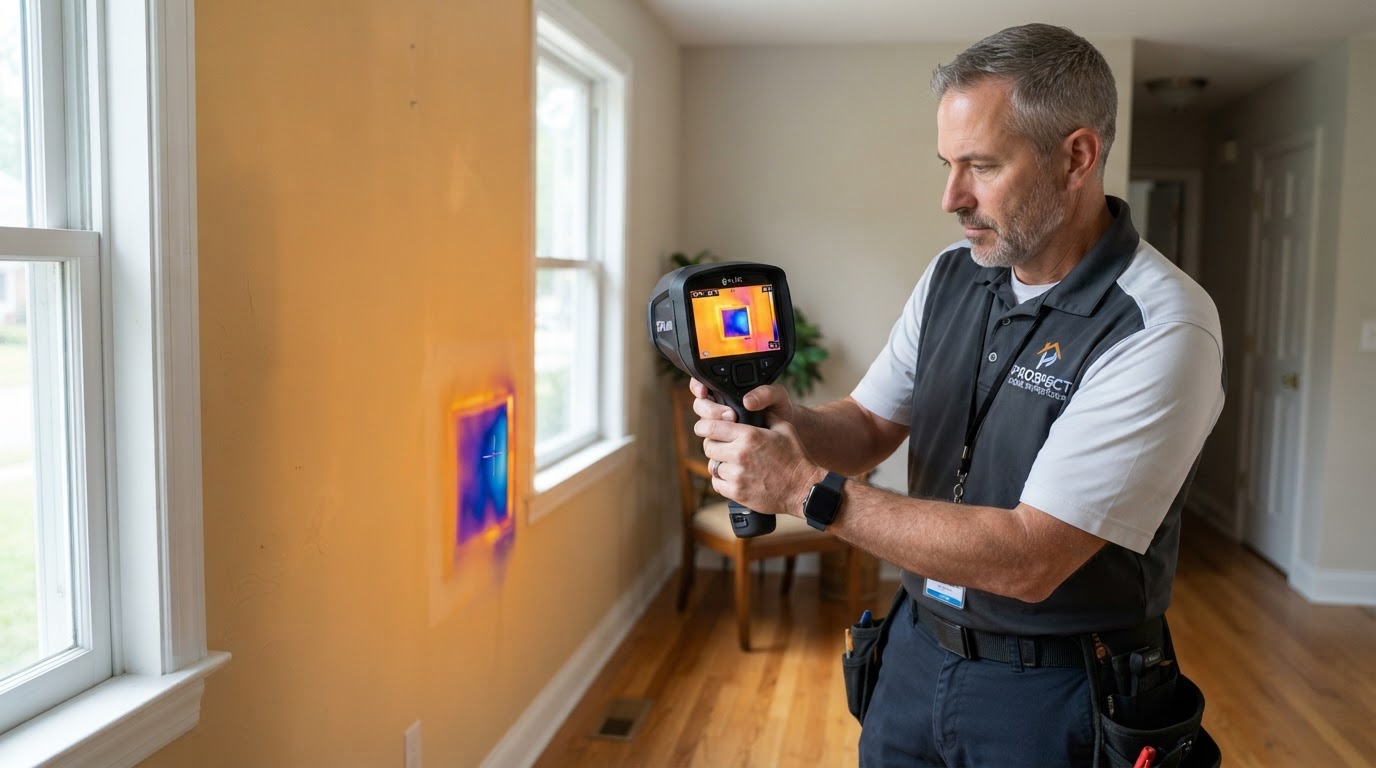
A temperature pattern may suggest an insulation gap or air movement, particularly when indoor and outdoor conditions create a useful temperature difference. Framing itself can also produce a regular pattern because different materials transfer heat differently. Ask whether the inspector could compare the image with accessible attic or crawl-space observations. A suspected insulation gap may be clearer where the material is visible. Where access is unavailable, the report should retain that uncertainty. A thermal scan during a home inspection is not automatically a full energy assessment. Quantifying air leakage, evaluating the whole building envelope, or designing an insulation improvement may require separately scoped testing and a building-performance professional. Before paying for an upgrade based on a scan, ask what evidence supports the location and proposed repair. Adding insulation without understanding moisture, ventilation, and the surrounding assembly can leave the original problem unresolved.
Heating patterns and radiant floors
When equipment is operating and conditions are suitable, infrared imaging can help show differences in heat distribution. On a radiant floor, a visible heating pattern may help identify areas responding during the test. That image does not establish the condition of every concealed tube, the complete design, or performance after hours of operation. Floor coverings, furniture, operating time, and control settings can affect what is visible. A zone that was not activated or did not have enough time to warm remains a different question from a zone observed operating. For properties with multiple zones, ask for a clear association between the image and the system being evaluated. A photograph labeled only “radiant heat” may be difficult to use later if the house has several rooms or separate controls. The STS luxury inspection page explains why complex systems need advance scope planning.
Electrical temperature differences
A thermal image may identify an unusual temperature difference at accessible electrical equipment. Interpretation depends on operating load, component type, comparison points, and the conditions of the scan. A warmer component is not automatically defective, and a cool component under little load is not proof of reliable performance. FLIR’s inspection guidance emphasizes the importance of understanding the tool and interpreting images appropriately. For a buyer, the useful result is an explanation of the observed anomaly and whether electrician evaluation is recommended - not a diagnosis based only on a color. Electrical inspection belongs to qualified professionals. Do not remove panel covers, touch components, or create heavy electrical loads yourself to reproduce an image. If the inspector identifies a concern, ask an electrician to evaluate its cause and correction.
From image to conclusion: an evidence ladder
This is an illustrative explanation of reasoning, not a promise that every scan follows the same testing sequence. The appropriate steps depend on the property, scope, and concern.
Conditions that can limit a scan
An inspection in mild weather may provide less useful contrast for some insulation questions than one with a strong indoor-outdoor difference. Direct sunlight, recent rain, wind, heating cycles, and air-conditioning operation may also change patterns. Access matters just as much. Furniture, stored belongings, finishes, and equipment covers can obstruct the relevant surfaces. The camera cannot make a blocked wall or concealed connection fully inspectable. Discuss preparation before the visit. Do not change thermostats to extreme settings, wet surfaces, open equipment, or alter the property to “help” the camera. Ask the inspector what normal operating conditions would make the intended evaluation useful and obtain owner cooperation where needed.
Illustrative example: a cool patch below a bathroom
Imagine a cool patch appears on a ceiling beneath a bathroom. The inspector compares surrounding areas, checks visible conditions, and takes appropriate moisture measurements. The measurements do not indicate elevated moisture at the tested locations. That does not prove the ceiling has never leaked. It also does not justify calling the image an active plumbing leak. The report may explain the pattern, the checks performed, and any recommendation based on the remaining evidence or history. This hypothetical example shows how a useful investigation can narrow a question without forcing a diagnosis.