
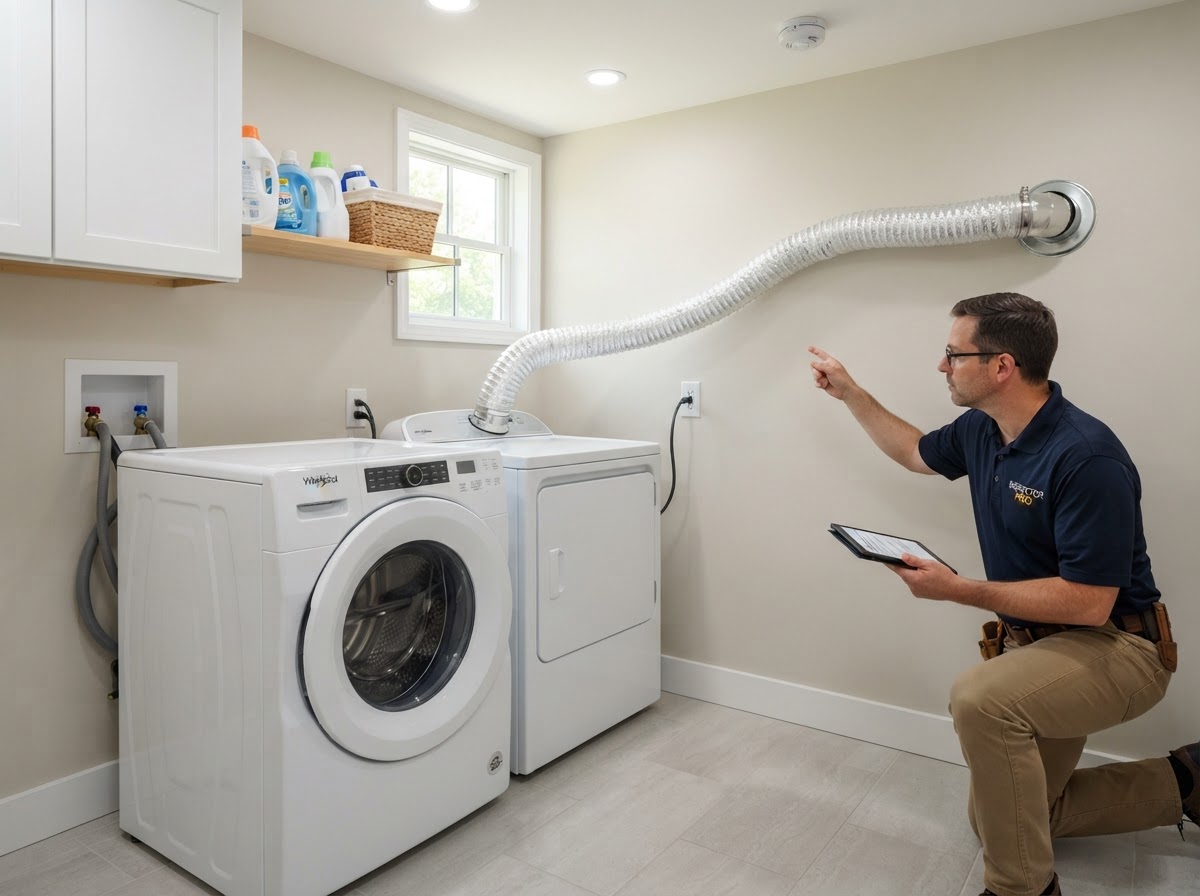
Appliance observations depend on the inspection agreement, access, utility availability and safe use of normal controls. A brief operating check can identify some concerns, but it is not a complete service, warranty or exhaustive recall search. Buyers should confirm which appliances are included, document those that could not be operated, and request the information needed for safe handover. Dryer exhaust deserves its own installation and maintenance questions.
Ask for the appliance list before inspection day
Do not assume that “home inspection” means every appliance receives the same testing. The NYS home-inspection standards exclude household appliances from the required minimum scope. An inspection company can agree to additional observations, but those should be described in the contract. STS's current buyer-inspection description describes basic appliance checks where included in the agreed scope and where equipment is connected and accessible. The examples include common kitchen equipment, but the exact property and agreement control. Do not infer that washers, dryers, portable appliances or every specialty device are automatically included. Send a list of the appliances you expect to remain with the property. Separately, have your attorney or agent clarify what the purchase agreement includes. An inspector observing a refrigerator does not establish that the seller has agreed to leave it behind.
Normal-control operation is a limited observation
A normal-control check uses the equipment's ordinary operating controls when conditions permit. It does not involve dismantling the appliance, servicing internal components or running every possible program. Manufacturer restrictions, missing parts or visible concerns may prevent operation. Ask about how appliance findings are reported. The report should identify the appliance and the observation made. “Dishwasher operated on a selected cycle” is different from a claim that every cycle, drying function and internal component was tested. Likewise, a burner or oven observation does not establish precise temperature calibration or long-term performance unless that work was specifically arranged. Ask what was actually checked and what was unavailable. A useful limitation is specific: disconnected power, water unavailable, obstructed access or a condition that made operation inappropriate. “Not tested” should not be silently read as either satisfactory or defective.
Visible installation clues can matter
Accessible observations may include visible leakage, damaged components, unusual connections, inadequate support or concerns with the surrounding installation. The correct detail depends on the exact appliance and its instructions. A recently installed unit can still require follow-up. Ask for the make, model and installation information. A qualified appliance technician or relevant trade can compare the installation with the manufacturer's requirements and investigate a specific symptom. Avoid prescribing a repair from the appliance's age or from a photograph alone. If a concern involves an electrical, gas or water connection, the appropriate qualified professional should address it. Buyers should not move heavy appliances, disconnect lines or reach behind equipment to improve inspection access. Owner authorization and safe methods matter even when the goal is simply to read a label.
Leakage observations need an operating context
A dry appliance at the beginning of a visit may behave differently during use. Conversely, a stain beneath a cabinet may be historical or have another source. Ask the inspector to document whether moisture was active, when it was observed and which accessible area was involved. The follow-up should identify the appliance or connection under investigation and any adjacent material requiring evaluation. Replacing an appliance does not automatically establish that surrounding concealed materials are satisfactory. A technician's service report should explain what was found and what remained outside the work scope. For a purchase, keep the original observation with any repair record. A receipt naming only the brand is less useful than a service description tied to the location and reported symptom. That detail helps a later professional determine what was actually resolved.
Dryer exhaust is a route, not just a visible hose
A dryer exhaust system carries air from the appliance toward its termination. Accessible portions can reveal concerns, but concealed routing may remain unknown. A short visible connector does not establish the condition or configuration of the entire route through walls or ceilings. The U.S. Fire Administration's clothes-dryer guidance emphasizes professional installation and maintenance, lint management and an unobstructed exhaust arrangement. Ask the appropriate professional to evaluate the installed route against the actual dryer's instructions, including any concealed or unusual configuration. Do not assume that a dryer becoming warm proves satisfactory exhaust performance. Nor should a buyer disconnect the duct or move the machine to conduct an improvised test. If routing is unclear, request the installation records and a qualified evaluation with an agreed scope.
A laundry renovation creates a records question
Moving laundry from a basement to an upper floor can change connections, access and exhaust routing. Ask when the relocation occurred and what work was included. The relevant records may involve several trades rather than a single appliance delivery receipt. In a Long Island property with additions or a converted living area, identify the actual route and the authority responsible for any relevant alteration records. Do not apply one town's permit procedure to every address, and do not infer approved use from the presence of laundry equipment. If the appliances belong to a tenant or are excluded from the sale, document that distinction. The physical connections may still be relevant to the property inspection, while appliance ownership and replacement arrangements belong with the transaction documents.
An appliance handover checklist
Create one entry for each appliance expected to remain. The checklist is useful even when some operating checks are outside the home-inspection scope. Keep unavailable information visible on the list. An unreadable model label is an unresolved identification issue, not permission to guess the product. A missing manual can often be requested from the manufacturer once the model is confirmed.
Recall research is separate from a brief inspection
The CPSC recall and product-safety database is a primary resource for checking identified products. Matching a notice can require model, serial or manufacturing information, so a brand name alone may be insufficient. A general inspection should not be represented as an exhaustive recall search. If a product concern is identified, follow the manufacturer's and CPSC's applicable instructions and arrange the appropriate professional assistance. Do not assume that a product is recall-free simply because no recall is mentioned in the report. For connected appliances, transfer access through the manufacturer's authorized process. Avoid sharing the seller's personal account credentials. Account handover is a practical ownership task, but it does not establish mechanical condition or replace the appliance's operating instructions.
Plan around disconnected or unavailable equipment
If water or electricity is off, or an appliance has been disconnected for moving or winterization, ask the owner to coordinate appropriate restoration with qualified professionals. Do not connect unfamiliar equipment yourself to complete an inspection checklist. Illustrative scenario: a dishwasher is visible and appears recently installed, but its water supply is disconnected. The inspector can document accessible condition and the operating limitation. A later service or inspection should be specifically arranged after proper connection; the initial report should not be treated as proof of functional performance. Review STS's service information and confirm the appliance scope before the appointment. This avoids discovering at closing that an expected appliance was outside the agreement or could not be operated.