
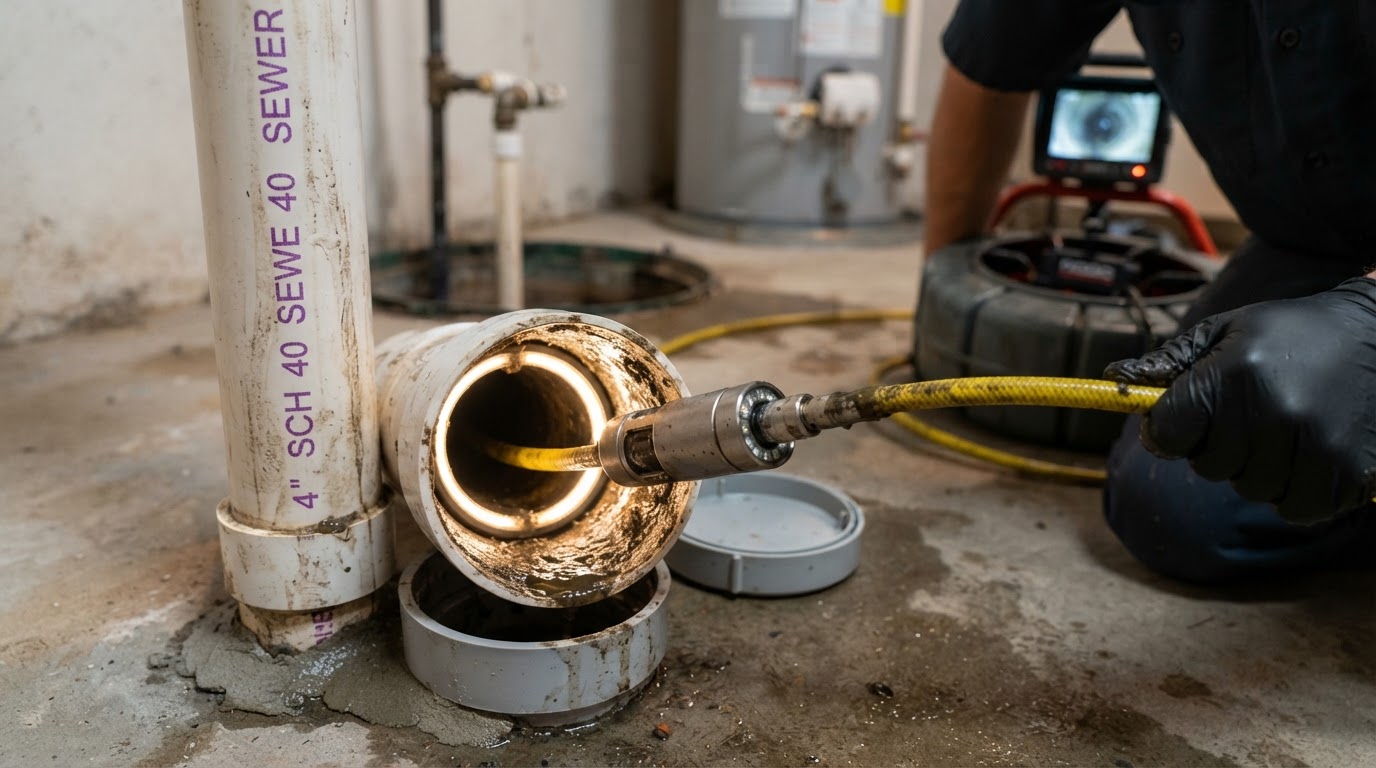
Review the STS sewer scope service alongside the general buyer inspection scope. Confirm which work you are ordering rather than assuming one appointment includes every evaluation in the table.
What a waste-line camera may show
Depending on visibility and access, the recording may show roots, separated or displaced joints, cracks, obstructions, deterioration, or sections holding water. It may also show changes in material that suggest only part of the route was replaced. InterNACHI describes sewer scoping as a video inspection of the lateral line and emphasizes access planning, documentation, and avoiding forcing equipment through obstructions. InterNACHI’s sewer-scope guidance. For the buyer, the most important result is a clear statement of the route viewed, observed concerns, and coverage limitations. An image showing roots supports a finding of roots at the visible location. It does not establish the exact size of an opening hidden behind them. Standing water may indicate a low area, but the cause and repair implications can require further assessment. A video is evidence to interpret, not an automatic repair specification. Ask whether you will receive the video, still images, written findings, or some combination. If the display includes distance, ask where the counter started. A distance reading along a pushed camera cable is not automatically a surveyed location or excavation depth.
Access determines how much can be evaluated
A cleanout is an access fitting that can allow entry into the waste line. Its location, orientation, condition, and accessibility influence the inspection. Some properties lack a practical entry point, and some fittings cannot be safely opened without plumbing work. Before the appointment, ask the seller or listing representative to identify known cleanouts and keep access clear. Do not ask an unqualified person to force open a corroded cap. Toilet removal, excavation, drain cleaning, and installing a cleanout should not be assumed to be part of the camera fee. Even with good access, sharp turns, heavy buildup, standing water, obstructions, or equipment reach can prevent complete coverage. A report should distinguish the portion viewed from the portion not viewed. “The camera stopped” is a limitation; it is not evidence that the remaining line is acceptable. If cleaning is recommended before another camera pass, ask the contractor whether the pipe’s apparent material and condition affect the appropriate cleaning method. Preserve the original recording so later findings can be compared with the earlier condition.
Why an inlet view is not a septic inspection
Reaching the end of a pipe may help identify its destination. It does not show the whole tank, establish that the tank is watertight, measure the effective disposal area, or determine how the soil will receive wastewater under sustained use. An onsite-system specialist may need records, properly exposed access points, evaluation of components, service history, and suitable operational observations. Ask the specialist to explain the method, any pumping or excavation, owner authorization, safety precautions, and what will remain uncertain. EPA’s homebuyer guide to septic systems recommends obtaining system information and arranging a system inspection before purchase. Treat that as a separate planning task from looking through the connecting pipe. Never enter a tank or cesspool or attempt to open unsafe covers yourself.
Capacity, permits, and future use need their own answers
A system that handled a lightly occupied seasonal house may be asked to serve a different pattern after the sale. The camera cannot establish whether the system is approved for the proposed use or whether future additions will be permitted. Tell your attorney and wastewater professional about intended changes: additional bedrooms, expanded occupancy, a guest building, or substantial renovation. Ask the relevant authority which approvals and design records apply. Requirements can depend on jurisdiction, property conditions, and the proposed work; a general blog cannot settle them for every Long Island address. Avoid treating a pumping receipt as a performance certificate. It documents a service event. It may provide useful observations, but it does not independently establish the condition of every disposal component. Similarly, a permit records an approval process; it does not prove present physical condition.