
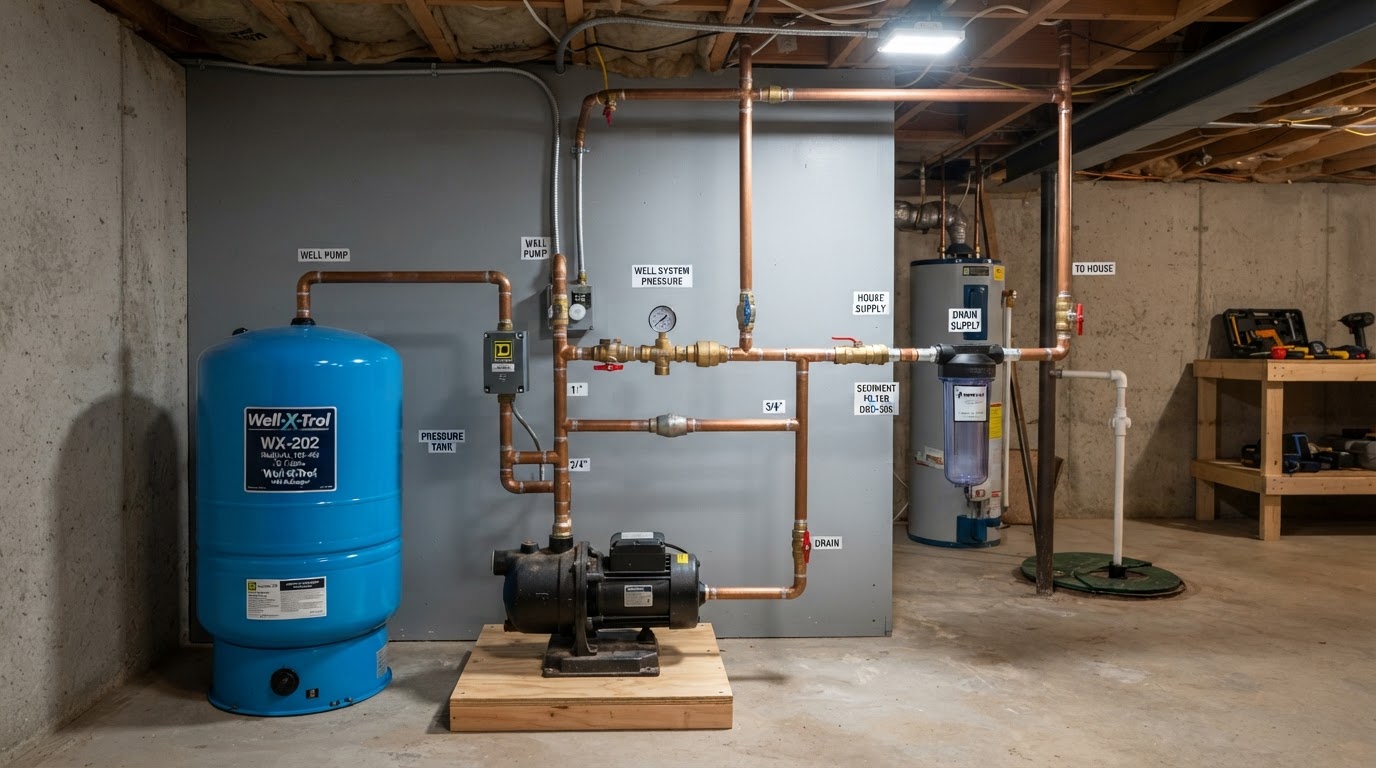
Keep quality, quantity, and pressure on separate lines
Pressure describes one aspect of delivery. Well yield concerns the amount of water the source can supply over time. A pressure tank, pump, piping, treatment equipment, and fixture restrictions can influence what you observe at a faucet. If the question is sustained supply for a household plus irrigation, ask for a test designed to address that demand rather than relying on a short fixture check.
Choose a laboratory panel around the property
A laboratory panel is a defined list of substances or indicators analyzed. “Passed the water test” has little meaning without that list, the sampling date, the sample location, and the actual results. The CDC's private-well guidance recommends at least annual testing for total coliform bacteria, nitrates, total dissolved solids, and pH, with additional testing guided by local concerns. It recommends a state-certified laboratory and consultation with the health department. That national guidance is a starting point for a testing discussion, not a claim that one standard panel meets every property's or lender's needs. Ask the county health department or qualified laboratory which additional analyses fit the property's location and history. Discuss known nearby contamination notices, former uses, flooding, fuel-related concerns, and agricultural context when relevant. If PFAS or another specific contaminant is a concern, ask whether it is actually included; do not infer coverage from a package name such as “comprehensive.” The Suffolk County private-well program describes microbiological and chemical testing and emphasizes that each well needs its own evaluation. A nearby well's result does not establish yours. The county program serves primary drinking-water wells, not irrigation wells, and warns that its timing may not meet a real-estate closing deadline. Confirm current options directly before planning around that service.
Decide where and how samples will be collected
The sampling plan should identify the question first. Water before treatment can help characterize the source. Water after treatment can help evaluate the water delivered at the selected location. A sample from one point does not automatically describe all taps, branches, or treatment configurations. Ask the provider to document: The exact collection point and whether it is before or after treatment. The requested laboratory panel and relevant reporting limits. Who collects the sample and the laboratory's instructions. Collection date, time, and handling requirements. Recent treatment changes, disinfection, repairs, or periods of nonuse. Whether the lender or other recipient requires a particular collector or form. Do not substitute a kitchen jar for the prescribed containers or improvise a sampling procedure. Different analyses can require different preparation and handling. Let the laboratory and sampler specify the process, including how recent disinfection or treatment affects the appropriate testing schedule. For the Suffolk County program, county personnel collect samples under its protocol. A separate commercial laboratory may have its own approved arrangements. Confirm those arrangements before assuming that a seller-collected sample will be acceptable for your purpose.
A treatment system needs a reason and a record
A filter housing, softener, ultraviolet unit, or reverse-osmosis system tells you equipment is present. It does not establish why it was installed, whether maintenance is current, or what contaminants it addresses. Request the original water analysis, equipment specifications, installation documents, service history, and later test results. Ask which taps receive treated water and whether any bypass is in use. A treatment specialist should explain the system's intended function and what evidence supports its performance. Separate aesthetic concerns from health-related interpretation without dismissing either. Staining, taste, and odor can be useful reasons to investigate, but appearance cannot determine whether water is suitable to drink. Ask the laboratory or health department to explain the results and the next steps; an equipment sales recommendation alone is not a complete interpretation. The STS services page provides an overview of available inspection options. Use it to start a scope conversation, then obtain the specific water-testing deliverables in writing. Do not assume treatment design or laboratory interpretation beyond the agreed service is included.
Make the calendar part of the testing plan
Work backward from your attorney's transaction deadlines. Allow for access, sample collection, laboratory processing, explanation of results, and any necessary follow-up. Ask what happens if a sample is rejected or an additional analysis is needed. A practical sequence is: 1. Identify the supply and collect prior records. 2. Ask the lender for its exact water-related requirements, if any. 3. Confirm the panel and sampling plan with the laboratory or provider. 4. Schedule equipment evaluation and any separately required performance test. 5. Review results with the appropriate qualified professional. 6. Document unresolved questions and discuss transaction timing with your attorney and agent. Illustrative scenario: A house has good pressure during the inspection and a recent bacteria result from a treated kitchen tap. The buyer also wants to understand source-water chemistry and whether the well can support planned irrigation. The existing observations answer neither question completely. A targeted sampling plan and a separate performance discussion are more useful than simply repeating “the well passed.”
Read the results as a dated record
Keep the complete laboratory report, including the sample identity, methods, units, detection information, and explanatory notes. A short email summarizing selected results can omit information a later professional needs. If the laboratory flags a result, ask the health department or qualified water professional about immediate use precautions, confirmation, investigation, and appropriate treatment. Do not assume boiling removes chemical contamination or that adding a filter is the correct response. Follow advice specific to the identified concern. After any corrective work, ask what verification is appropriate and when it should occur. A result reflects the sample and conditions at collection; it cannot guarantee future quality. Changes in the property, well system, or surrounding conditions can justify additional testing. Review the STS sample report page for the general reporting format, and ask separately how laboratory documents and well findings will be delivered. Keep those records together while preserving their different purposes.