
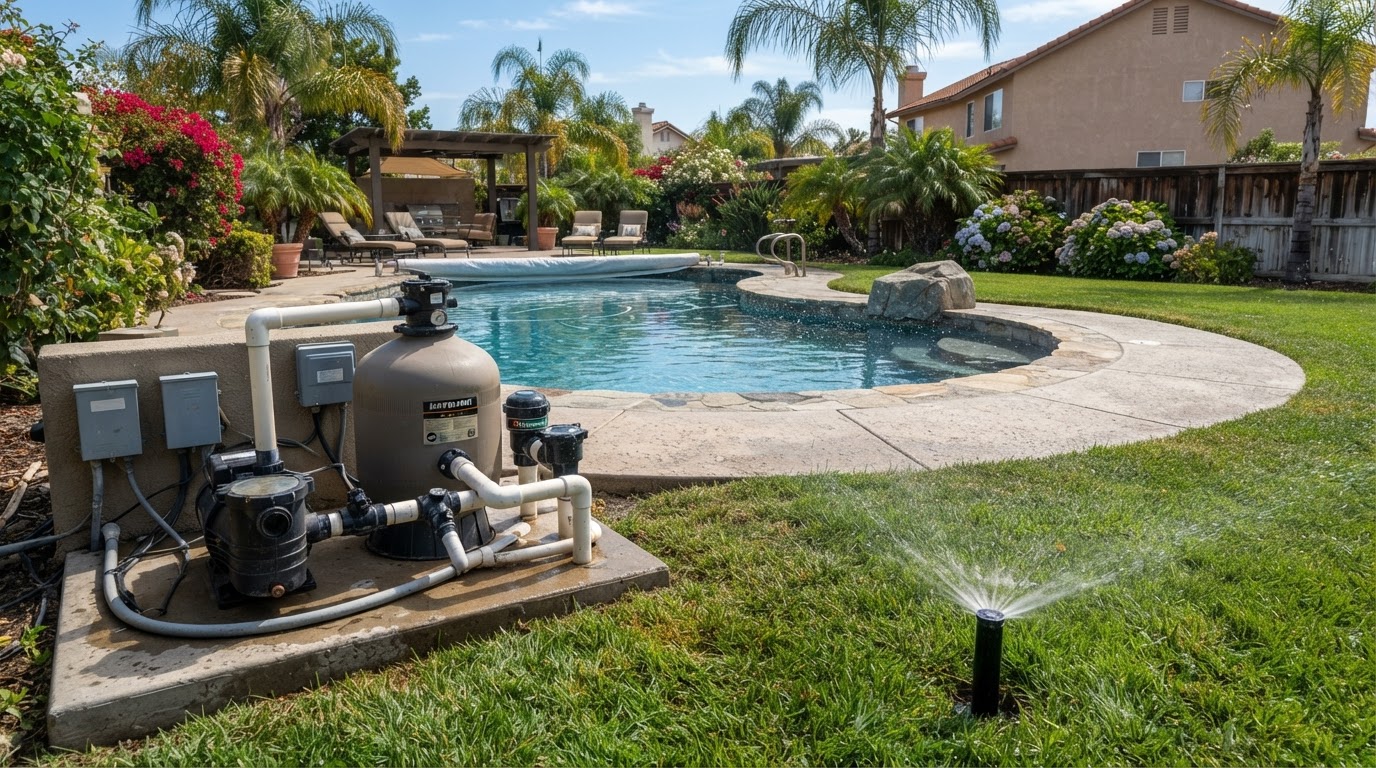
A working pump does not establish the performance of a heater, cover mechanism, lighting system, or automated control. Record each result individually. For a Hamptons property with extensive outdoor systems, discuss coordination through the STS luxury inspection service.
Visible leaks and unexplained water loss need different
evidence
Water around a fitting may provide a specific location for investigation. A seller's report that the pool needs frequent refilling raises a broader question. The explanation may require review of operation, weather, maintenance practices, structure, or concealed piping rather than a conclusion based on one observation. Ask for service records, prior leak investigations, repair invoices, and any documented water-loss history. If a specialist recommends pressure testing or another diagnostic method, ask which parts it will evaluate and what its limitations are. A general equipment inspection should not be described as a comprehensive leak-detection test unless that work is actually contracted. Also distinguish pool-water chemistry from physical condition. A current service visit or clean-looking water does not establish the condition of hidden piping or surrounding construction. A property can be well maintained and still have unresolved questions that require a specific investigation.
Pool safety deserves its own scope
Barriers, gates, alarms, suction-related components, and electrical safety features are important, but an equipment review is not automatically a complete compliance assessment. Ask exactly which safety observations are included and whether you need a separate specialist review before use. The NYS Department of State's current code FAQ identifies the 2025 code framework, fully effective December 31, 2025, and directs readers to residential pool provisions addressing barriers, alarms, entrapment protection, and electrical installations. Applicability to an existing pool or proposed work must be checked with the responsible local building department. Do not rely on an old online checklist to determine a particular property's requirements. Request available pool permits, approvals, alteration records, and service documentation. A past approval does not establish that gates, equipment, or other features remain in the same condition. A physical inspection likewise does not independently verify every historical approval. Keep the pool secured during inspections and ownership transitions. Do not treat a pending inspection or a service invoice as permission for unsupervised use. Arrange needed corrections and qualified review of unresolved safety concerns before using affected features.
Irrigation needs a zone-by-zone record
An irrigation system may have multiple zones, different water sources, seasonal schedules, and controllers with remote access. Ask for the zone map and identify which areas each zone serves. A controller label reading “front” may not be enough for a new owner to locate the actual equipment. During an agreed operating check, observations may include whether a zone responds, visible leakage, damaged heads, or spray directed toward the building. Concealed lines and components remain limited by access and the test conditions. A functioning zone does not establish the condition of every buried connection. Useful handover questions include: Which zones were operated, and which were unavailable? Is irrigation supplied by public water or a separate well? Have any zones been abandoned, modified, or added? Where are normal owner controls, and who performs seasonal service? Are there current service recommendations or records of repeated repairs? Who owns or administers any app-based account? Do not accept another person's shared password as the long-term handover plan. Ask the service provider how to transfer authorized control and retain the equipment instructions.
Backflow protection is a separate question from sprinkler
operation
A cross connection is a link through which non-drinking water could enter the drinking-water system. Backflow is a reversal of normal flow under certain pressure conditions. The Suffolk County Water Authority's guidance identifies irrigation and hoses as relevant contamination pathways. Identify the property's actual water supplier and ask what protective equipment, records, and testing apply to that connection. SCWA guidance should not be treated as the complete rulebook for every Long Island water district or private-well arrangement. Seeing a device near the irrigation piping does not establish its approval, suitability, or current test status. Ask for its identification and the applicable test documentation. A visual irrigation check is distinct from a required backflow-device test by an appropriately qualified provider. Confirm responsibility for arranging that work rather than assuming it is included in the home inspection or annual sprinkler opening.
When the systems are winterized
An off-season inspection may still document accessible equipment, visible conditions, and records. It should clearly state what was not operated and why. The unresolved items belong in the buyer's decision process, not in an assumed “passed” category. Illustrative scenario: A buyer inspects a property in November. The pool is covered and the irrigation system has been winterized. Equipment labels and service records are available, but normal operation is not demonstrated. The next step is to identify the missing checks and consult the service providers, attorney, and agent about timing - not to ask the inspector to start closed systems without preparation. Potential arrangements depend on the property and transaction. A return visit may be practical; in other circumstances, a specialist's existing records or later evaluation may inform planning. Your attorney should advise on any contractual arrangement. The inspector does not guarantee future operation through a limitation note. Use the STS sample report page to review how observations are presented, and ask how optional pool and irrigation findings will be identified in your own report.