
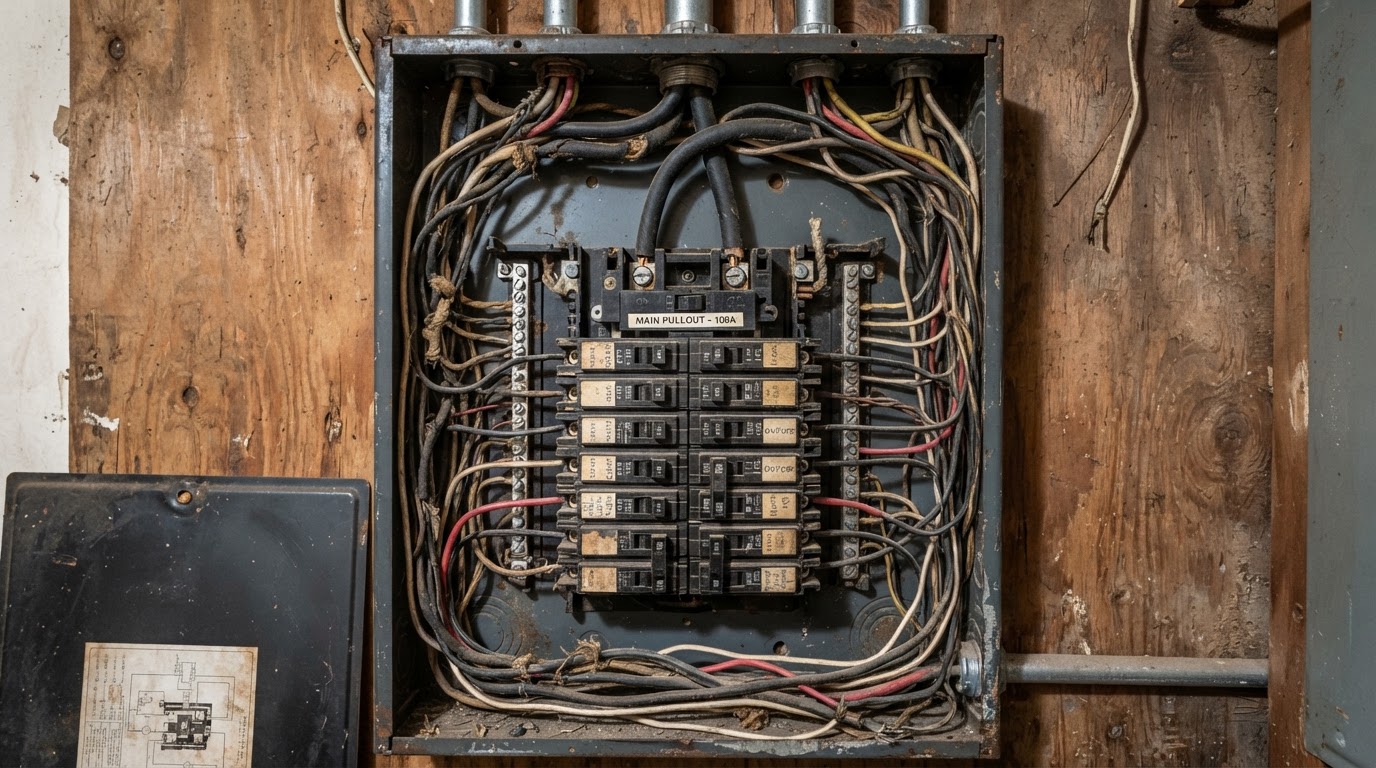
Moisture needs its own investigation Corrosion or staining near electrical equipment may prompt both electrical and building-envelope follow-up. Repairing a connection without investigating recurring water entry can leave the cause unresolved. The report's location matters: exterior service equipment, a basement panel, and wiring near a plumbing leak present different investigative questions. Do not assume that drying the visible surface restores affected equipment. A qualified electrician should determine its condition and appropriate action. Any necessary roof, wall, or plumbing correction belongs in the repair plan as a separate documented task.
Translate unfamiliar report terms into useful questions
These descriptions are starting points, not repair instructions. A test indication may need investigation to establish the underlying wiring arrangement. A photograph rarely shows every component relevant to a final diagnosis.
Understand receptacle protection without assuming every
device looks alike
A ground-fault circuit interrupter, or GFCI, is designed to reduce shock risk by interrupting power when it detects leakage current. The Electrical Safety Foundation's GFCI guidance explains the protection and the importance of qualified installation. It is different from the overload protection associated with ordinary circuit breakers. A receptacle without its own test and reset buttons may receive GFCI protection from another device or a breaker. Appearance alone therefore does not answer whether protection exists or works. The inspector's test result and explanation are more useful than a buyer's visual count of buttons. An arc-fault circuit interrupter, or AFCI, serves a different protective purpose involving certain arcing conditions. If a report recommends added protection, ask which circuits or locations are involved and have an electrician determine the applicable scope. Requirements can depend on the work, code edition, and local authority; an educational article is not a property-specific code ruling. Representative receptacle testing also has limits. Furniture, storage, appliances, and occupied rooms can restrict access. A tested device does not establish every connection on its circuit, and an untested device should not be silently treated as satisfactory.
Aluminum wiring: identify the application before drawing
conclusions
The phrase “aluminum wiring” needs context. The U.S. Consumer Product Safety Commission's Repairing Aluminum Wiring guide addresses small solid aluminum branch-circuit wiring and its connection hazards. That concern should not be indiscriminately applied to every larger aluminum service or feeder conductor, or to copper-clad aluminum wiring. If that branch-circuit wiring is identified or suspected, request evaluation by an electrician experienced with it. Ask how the material was identified, which areas were accessible, and what the recommended correction would cover. The CPSC warns that hazardous connections may exist without earlier warning signs; normal operation is not a clearance. Do not accept a vague statement that “the outlets were changed” as documentation of a complete correction. Ask for records identifying the method, areas addressed, and qualified provider. Do not attempt to check or modify splices yourself. Repair selection belongs to the professional evaluating the actual installation.
Alterations deserve records as well as a visual review
A renovated kitchen, finished basement, generator connection, or converted garage can contain electrical work that deserves its own documentation. Ask when the work occurred, who performed it, what the contract covered, and which approvals were required and obtained. The absence of an invoice does not by itself prove defective work. It does, however, leave less evidence for evaluating what changed. Conversely, an invoice for a new panel does not establish the condition of concealed wiring throughout the building. For a seller, the STS pre-listing inspection service can help identify questions to resolve before marketing. Keep electrical repair records tied to individual findings so a later reviewer can see what was addressed. Avoid broad statements that the entire house was “brought up to code” unless the underlying review actually supports them.
Build a focused electrician request
Send the relevant report pages and photographs, not just a request for a general estimate. Include access limitations and your planned changes. Ask the electrician to distinguish observed defects, recommended safety improvements, and optional capacity upgrades. Illustrative scenario: A buyer's report identifies an accessible grounding concern, an untested basement receptacle behind storage, and uncertain capacity for a planned vehicle charger. One visit may address all three, but each needs a separate answer. Correcting the grounding concern does not establish the hidden receptacle's condition or approve the charger installation. Before the follow-up, collect: The finding number, location, and supporting photograph. The inspector's exact recommendation and any access limitation. Seller records for related installation or repair work. A description of new equipment the buyer intends to add. A request for written findings, proposed scope, and completed-work documentation. The STS sample report page can help you review the format used to communicate observations. For your transaction, discuss repair arrangements, deadlines, and documentation with your attorney and agent. An electrical recommendation does not decide the contract response.