
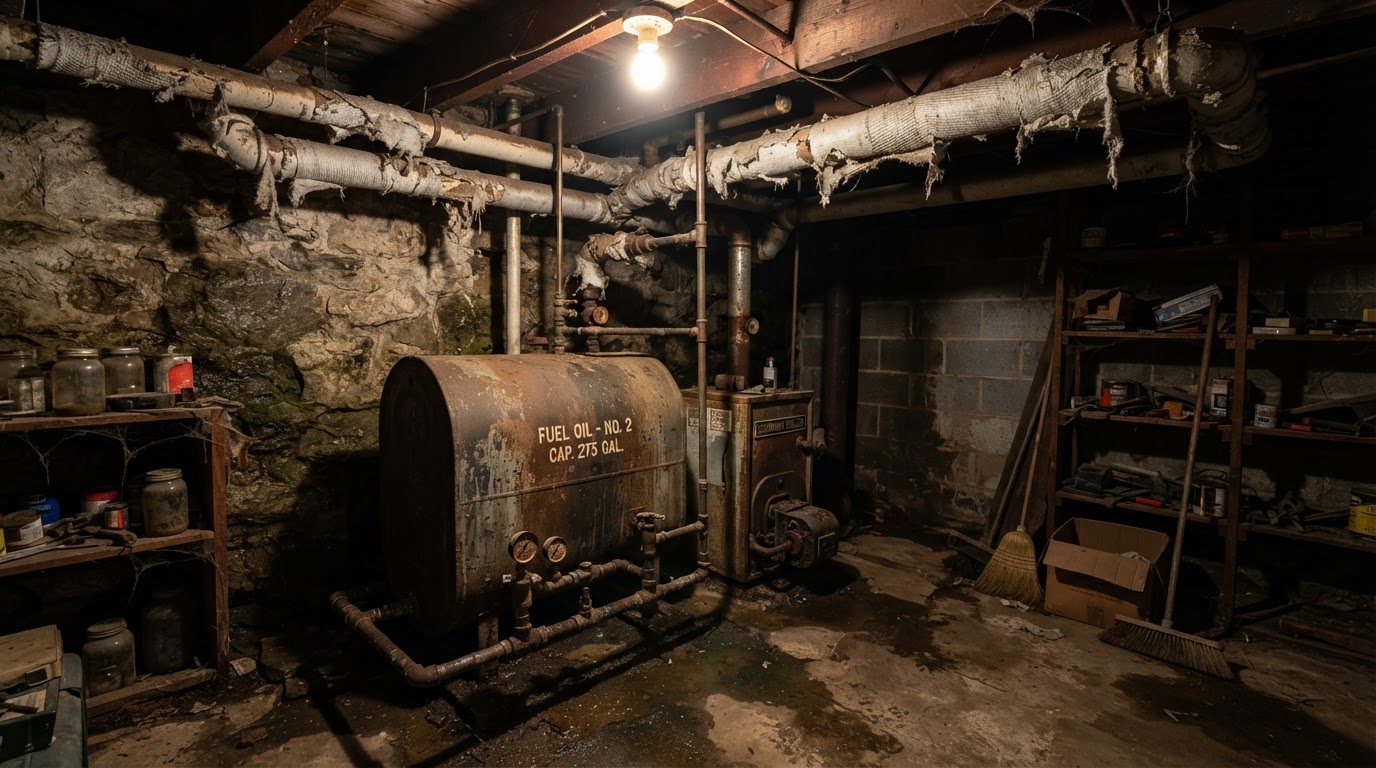
Oil tanks: separate location, condition, and environmental
questions
A visible oil tank can be described and accessible concerns reported. A buried tank presents different limitations, and a general visual inspection cannot establish everything beneath landscaping, pavement, or structures. An unexplained fill pipe may be a clue, but its destination and history need confirmation. Ask the seller which fuels have served the property and when conversions occurred. Request information about every known tank, including tanks no longer in use. If the history is uncertain, ask a qualified tank or environmental professional what investigation is appropriate. The proposed method should identify the area covered and obstacles that could limit results. Registration rules are not a condition assessment The NYS DEC homeowner tank guide explains that many smaller residential heating-oil tanks fall outside state Petroleum Bulk Storage regulation, while delegated counties including Nassau and Suffolk may have applicable requirements. Check with the relevant county agency rather than assuming a state exemption settles the local question. Whether registration is required does not establish whether a tank has leaked. Administrative status and physical or environmental condition need separate evidence. Likewise, a record search with no matching entry does not prove that no tank ever existed. Read closure records for what they actually document “Tank removed” and “tank closed in place” describe different work. Ask for the actual record rather than relying on an abbreviated listing statement. Look for the identified tank, location, date, contractor, procedure, and any related sampling or regulatory correspondence. Then ask the environmental professional what the available evidence establishes. A removal invoice documents a service; it does not automatically characterize all surrounding soil. A laboratory report applies to the collected samples and specified analyses, so its locations and methods matter. Do not turn a limited set of results into a guarantee about the entire property. DEC also notes that a tank test cannot predict future performance. If contamination or a suspected leak is identified, follow DEC's reporting guidance and obtain qualified advice promptly. Let the appropriate professionals determine investigation and corrective work; do not disturb a suspected tank or handle its contents yourself.
Suspect asbestos materials: identification requires more than
appearance
Materials associated with older construction can raise an asbestos question, but a photograph or visual impression does not determine composition. The inspector may identify a suspect material and recommend evaluation without claiming a laboratory-confirmed result. The next step depends partly on your plans. A buyer intending to remove flooring, replace heating equipment, or open walls has a different disturbance question from someone reviewing an accessible, undisturbed area. Describe the actual work to the specialist so the evaluation covers the materials that may be affected. The NYS Department of Labor's January 2026 survey guidance addresses asbestos surveys before renovation, repair, remodeling, and demolition, and identifies the certified New York State asbestos inspector's role. Confirm the survey requirements and any applicable exceptions for the project before work begins. A general home-inspection report is not that survey. Do not cut, scrape, sand, break, or collect a sample of suspect material as a buyer's investigation. Ask the qualified professional how identification should be handled. If asbestos is identified, the plan for management or disturbance requires the appropriate licensed and certified professionals and applicable procedures. An estimate that excludes asbestos-related work may be reasonable for its stated scope, but it leaves a budgeting question. Ask what information the contractor needs before giving a complete project estimate. Avoid assuming that a cosmetic renovation can proceed simply because the visible finish looks intact.
Lead-based paint: records and evaluation serve different
purposes
For most housing built before 1978, federal lead-disclosure rules address known information and available records, along with required notices and the buyer's opportunity for evaluation. The EPA's current buyer guidance explains these obligations. Your attorney can address applicability, exceptions, and the transaction documents. A disclosure that the seller has no knowledge of lead-based paint is not a test result. Conversely, a prior report should be read for the surfaces, locations, methods, and purpose it covered. It may not answer every question about later alterations or planned work. Ask a qualified lead professional which service fits your need. Identifying lead-based paint and assessing current lead hazards are related but different questions. Describe whether you are evaluating the purchase, planning renovation, or responding to a particular concern so the scope is appropriate. The general inspection may note deteriorated paint or recommend specialist review, but it does not certify that paint is lead-free. Do not begin sanding or scraping to investigate. Have proposed disturbance evaluated before work and use appropriately qualified providers for the required procedures.
Put renovation plans beside the inspection findings
Buyers often separate the purchase inspection from the renovation conversation. For older homes, those decisions can depend on the same unanswered questions. A planned boiler replacement may affect nearby suspect insulation; a flooring project may involve several older layers; an addition may extend into an area with uncertain tank history. Use a simple project worksheet: Planned work: Identify the room, system, and materials likely to be disturbed. Known evidence: List actual records and accessible findings. Unresolved question: State what composition, location, or condition remains unknown. Assigned provider: Identify the professional qualified to answer it. Required output: Request the survey, analysis, written findings, or regulatory record needed. Timing: Resolve the question before the relevant commitment or disturbance. The STS services overview can help start the inspection discussion. It should not be treated as proof that STS performs every tank, asbestos, lead, or environmental service described here. Confirm the provider and qualifications for each specialty assignment.
An example of keeping evidence in proportion
Illustrative scenario: A seller provides an invoice for an oil-to-gas conversion and says the old tank was “taken care of.” The buyer also plans to replace flooring near the former boiler. The conversion invoice supports the fuel change, but it may not identify the former tank's disposition or the flooring's composition. The useful response is two focused requests: obtain tank-related records and consult the appropriate material specialist about the planned disturbance. Neither concern justifies inventing a contamination finding. Neither is resolved by the appearance of the new gas equipment. Keep the resulting records with the home inspection and renovation file. The STS sample report page shows available reporting examples, but another property's documents cannot establish conditions at your house.