
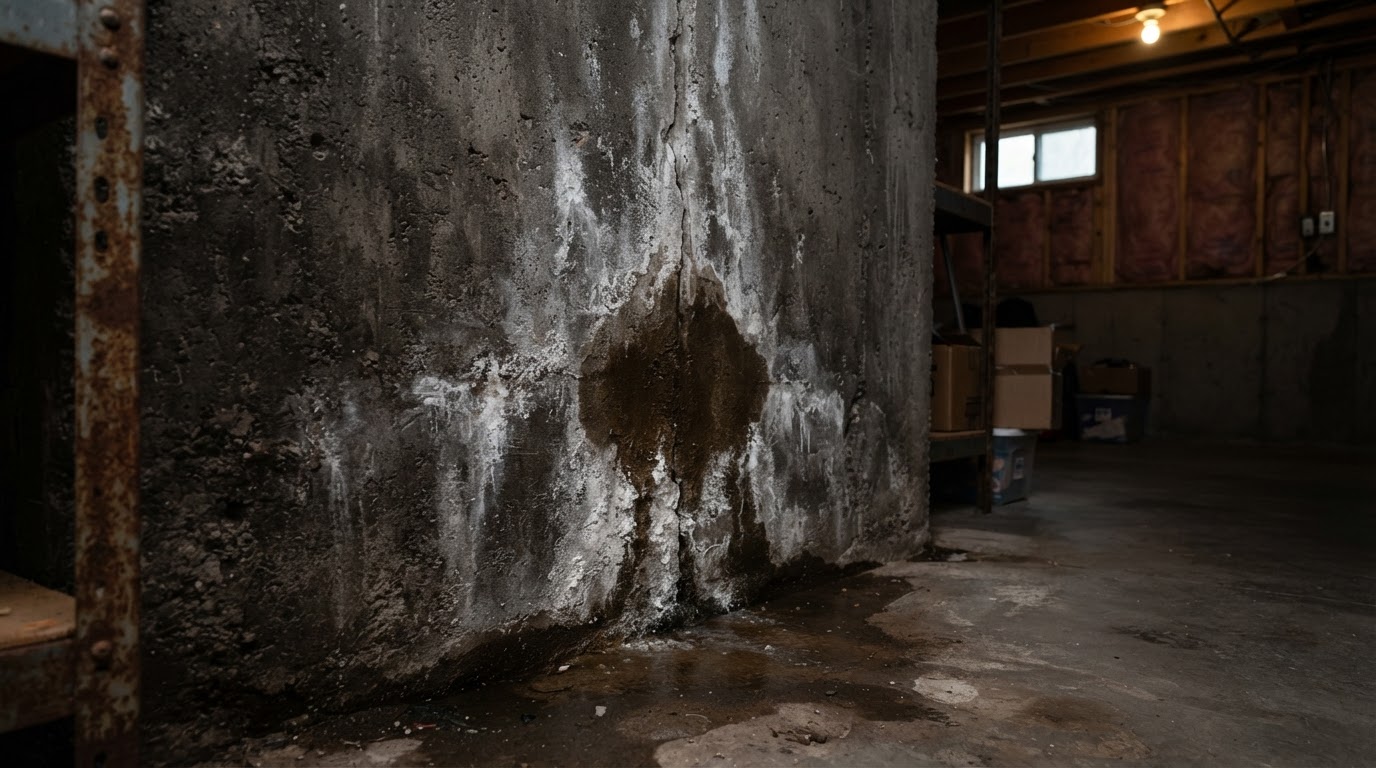
The white mineral deposits often calledefflorescenceare a clue, not a standalone diagnosis. Similarly, an odor warrants attention without proving mold throughout the building. Ask what additional observations or measurements would help distinguish the possibilities.
Condensation and water entry can coexist
Condensation occurs when moist air meets a surface cool enough for water to form. Liquid water can also enter through defects or below-grade assemblies, and plumbing can introduce a separate source. PNNL’s building-science explanation of moisture flow describes different ways moisture moves through buildings. This distinction changes the next step. A dehumidifier may help manage indoor humidity but does not repair a leaking pipe or address all routes of liquid water entry. Conversely, sealing a visible crack may not resolve condensation on other surfaces. Ask the evaluating professional to explain which mechanism the evidence supports. More than one may apply. Be cautious about a proposal that promises to solve “all basement moisture” without explaining the observations and the intended result.
Trace drainage outside before assuming the solution is inside
Roof runoff, gutters, downspouts, adjacent grading, window wells, paved surfaces, and landscape drainage can affect the area around a foundation. Look for the relationship between the exterior features and the interior concern. For example, an overflowing gutter near a stained basement corner is a useful lead. It is not a complete diagnosis. Ask whether the gutter was observed overflowing or whether that explanation is inferred from debris and staining. The distinction helps determine what to monitor after correction. PNNL’s assessment guidance for basements and crawl spaces treats moisture evaluation as part of planning building improvements. Before finishing a basement or adding insulation, establish what water-control work is needed and whether the space can dry as intended. Do not redirect runoff onto a neighboring property or change site drainage without suitable guidance. A contractor should evaluate the site and applicable requirements before designing drainage work. Your inspection can identify concerns without supplying that design.
What a sump system does - and does not - tell you
A sump system collects water at a designated location and pumps it to a discharge point. Its presence may reflect a deliberate water-management strategy, a history of water entry, or another installation circumstance. Ask why it was installed and request records. Useful observations include whether the equipment is accessible, whether normal testing is possible, and where the visible discharge route leads. Ask about service history, any backup arrangement, alarms, and what happens during a power interruption. A pump operating during a brief test does not demonstrate performance through a prolonged storm. A dry pit does not show whether the pump would handle water when needed. If the discharge destination or concealed drainage system is unknown, retain that as a question for the appropriate contractor.
Finished walls change the level of certainty
Drywall, paneling, insulation, floor coverings, and stored items may conceal foundation surfaces or past water patterns. An inspector can describe visible conditions but cannot treat every concealed area as evaluated. Thermal imaging or moisture measurements may help investigate accessible surfaces, but neither provides a complete view behind finishes. Ask whether further access would materially change the understanding of a specific concern and who should create that access with the owner’s permission. If a finished basement is central to your intended use, tell the inspector and your representatives. The importance of an uninspected area depends partly on what you need to establish before purchase. Whether the space is legally approved for that use is a separate records question for the municipality and your attorney.
Ask the seller for a history, not just a yes or no
“Does the basement leak?” can produce an incomplete answer. More specific questions are easier to connect to records: Has water entered during heavy rain, snowmelt, plumbing failure, or a power outage? Which rooms or wall sections were affected, and when? Were flooring, drywall, insulation, or belongings removed? Who performed drainage, waterproofing, plumbing, or sump work? Are invoices, warranties, photographs, or service records available? Has the same area been wet since the repair? Is the basement normally heated, cooled, or dehumidified, including when the home is vacant? Your attorney can advise how seller responses and disclosure documents fit the transaction. The inspector can use the history as context while distinguishing reported information from direct observations.
Illustrative example: old stains after a gutter repair
Suppose the basement has staining at one corner, but tested accessible surfaces are dry. The seller provides an invoice for a gutter repair completed during a dry period. No comparable heavy rain has occurred since. The repair may be relevant, but the evidence does not yet demonstrate performance under the conditions associated with the earlier water entry. A useful next step is to ask the contractor about the suspected source and arrange appropriate follow-up. This hypothetical example avoids both extremes: declaring the repair unsuccessful and declaring the problem permanently solved.
Turn a finding into a useful contractor request
Send the contractor the relevant report item, photographs, seller history, and a clear question. Ask for the likely mechanism, evidence supporting it, proposed scope, and how success will be assessed. If growth or affected materials are present, determine whether a separately scoped mold assessment is appropriate. EPA’s mold and moisture guidance reinforces that cleaning and moisture correction need to be connected. Do not treat a mold test as a substitute for investigating water entry. Review the STS services overview for a scope discussion and the sample-report page for reporting format. Records should make the location, observation, limitation, and recommended follow-up clear.