
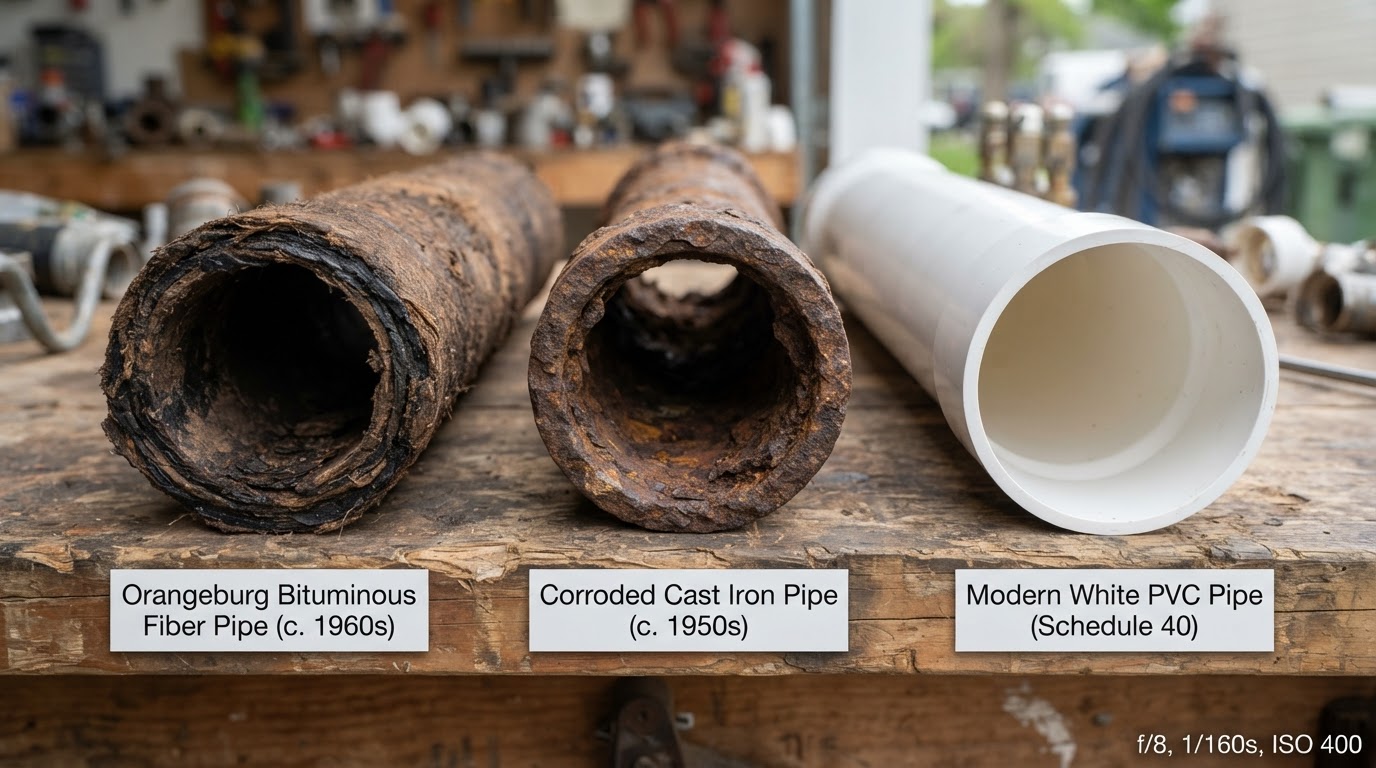
Cast iron: look beyond the word “rust”
Cast iron has long been used in drain, waste, and vent systems. Its condition depends on the installation, environment, wastewater exposure, and maintenance history. Manufacturer guidance distinguishes ordinary applications from more aggressive conditions that can accelerate deterioration; see Charlotte Pipe’s discussion of cast-iron performance. An older cast-iron line may present a rough interior, accumulated deposits, corrosion, cracking, or localized loss of material. Those observations are not interchangeable. Surface appearance does not reliably measure the remaining wall thickness. Material beneath deposits may be obscured, and a camera does not show every exterior surface. Ask the contractor to identify what is restricting flow and what is known about the pipe itself. “Needs cleaning” and “has a damaged wall” describe different work. A post-cleaning camera evaluation may improve visibility, but the suitability of cleaning must be assessed first. Also distinguish buried waste piping from exposed basement drains or vertical stacks. A recommendation about one section should not silently become a conclusion about every cast-iron component in the building.
PVC: newer material still needs sound installation
PVC is a plastic piping material. Its presence does not eliminate questions about joints, support, slope, damage, or transitions to other materials. A camera may show an offset where adjoining sections are not aligned, a visibly separated connection, damage, or retained water. The image alone may not establish why the condition developed. Possible installation or movement concerns require assessment of the actual route, support, connections, and surroundings. It is particularly useful to ask about transitions. Where a replaced PVC section meets older material, identify the connection and the extent of work documented in permits or invoices. A clear section at the start of the recording should not distract from an unresolved connection farther along. For a recently built property, coordinate questions about underground piping with the STS new-construction inspection service. Completed finishes and new fixtures do not provide a view of buried connections.
Four findings that require more than a material label
InterNACHI’s sewer-scope guidance treats the camera as a way to document pipeline conditions and refer discovered concerns for professional follow-up. The buyer’s practical task is to turn a recording into specific questions, not to choose a repair based on one alarming frame. What people mean by a “belly” A belly is a low portion of a pipe where water can collect. Retained water on video can suggest a slope-related concern, but the recording may not quantify slope or establish every cause. The extent of submergence, flow conditions, and downstream condition matter. Ask what supports the diagnosis and whether additional locating or measurement is needed. A written estimate should explain the section to be corrected and how the contractor will verify the result. Avoid a vague recommendation to “fix the belly” without identifying the work. Roots: clearing and correction are different Removing visible roots may improve passage, but it does not by itself explain or repair their entry route. Ask whether the proposal is maintenance, localized repair, lining, or replacement, and what each option is intended to accomplish. Do not assume every root finding requires complete line replacement. Equally, do not assume restored flow proves the underlying problem has been permanently resolved. The appropriate answer depends on the documented condition and a qualified assessment.
Before accepting a repair proposal
Request a proposal that identifies the observed defect, affected length, proposed method, and work needed to reach the line. Ask about permits, utility coordination, protection of landscaping or paved areas, and restoration responsibilities where applicable. For a lining proposal, ask how the existing pipe’s shape and condition affect suitability and whether connections will remain properly served. For replacement, ask which sections will remain and how transitions will be addressed. For a localized repair, ask what evidence supports limiting the work to that location. Get the evaluation and proposed verification in writing. This does not require becoming a plumbing designer; it makes the scope understandable enough to compare alternatives. Review the STS sample-report page when discussing how camera concerns will be documented. Retain the original recording and report so the repair contractor can evaluate the same evidence.
Illustrative scenario: mixed materials, one unresolved section
Imagine a line with a clear PVC section followed by an older section partly obscured by standing water. The camera cannot establish the condition beneath the water or reach the end of the route. “PVC looks good” would not summarize the whole inspection. A useful record identifies the viewed PVC, the material transition, the obscured area, and the stopping point. The next step may involve contractor evaluation and improved access or visibility. This hypothetical example shows why coverage matters as much as material.