
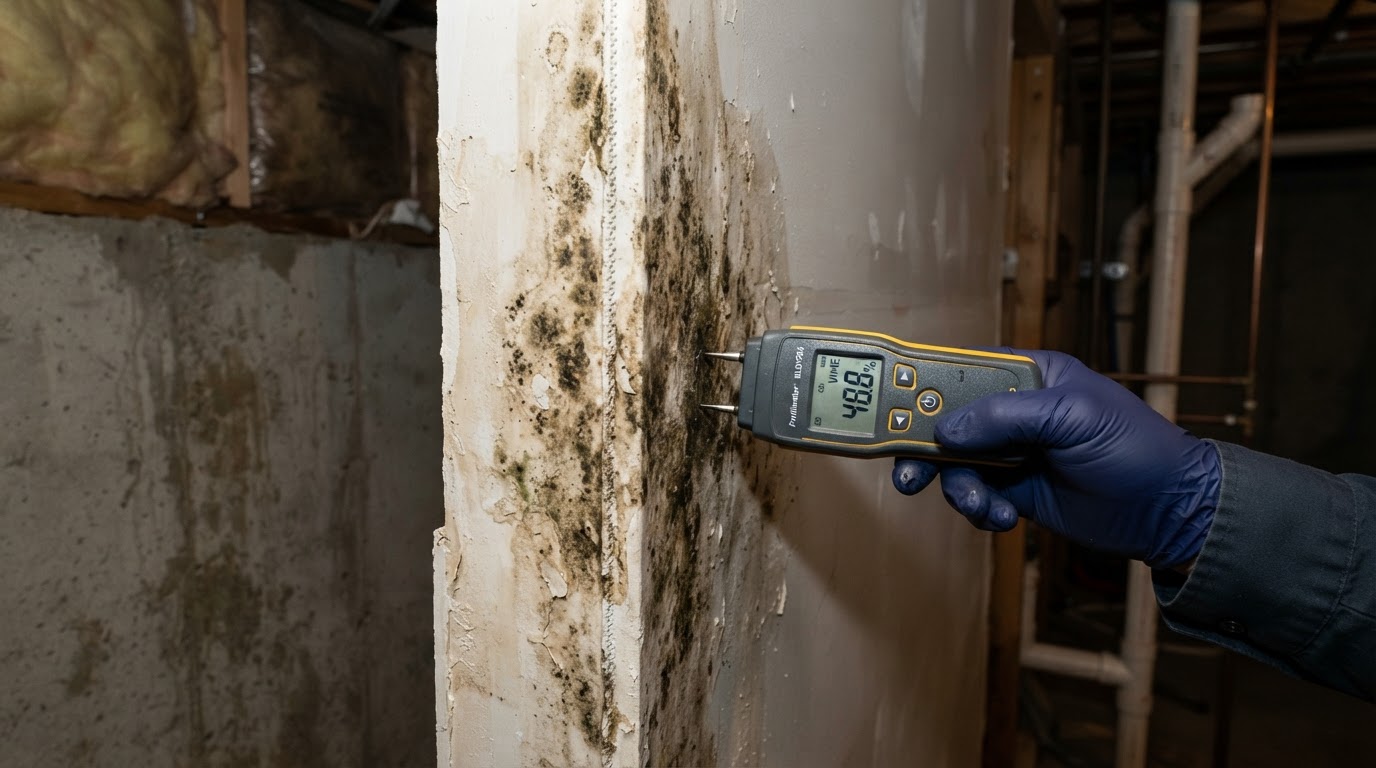
Useful questions include: Is there an active source? Has the affected material dried? What accessible surfaces are involved? Are there indicators of a concealed problem? Has previous work corrected the moisture condition or only changed the finish? EPA’s guide to mold and moisture emphasizes correcting moisture problems. Sampling alone does not repair a leak, improve drainage, or establish that wet materials have dried. A report that names organisms but leaves the water source unexplored may not answer the owner’s practical question. Do not disturb suspect concealed material just to obtain a better photograph. Opening a cavity can change the conditions and spread material. Ask the investigating professional what access is appropriate, who should create it, and what precautions the work requires.
When sampling may add useful information
Sampling can be worthwhile when the result will change a defined decision. The provider should explain the question, why the selected method fits, and how different results would affect the next step. For example, a surface sample may address the identity of material at a particular location. Air sampling may be part of a broader investigation with a specified protocol and interpretation. The laboratory method, locations, timing, building conditions, and comparison information all matter. Before agreeing to a package, ask: 1. What specific uncertainty is this sample intended to address? 2. Why is this method appropriate for that uncertainty? 3. What will a result establish - and what will it leave unresolved? 4. Who interprets the laboratory result alongside the site observations? 5. Will the final report explain limitations and practical next steps? These questions are more useful than choosing a service by the number of samples. More samples can provide more information when thoughtfully designed; an arbitrary larger package is not automatically a better investigation.
When testing may not be the next useful step
EPA states that sampling is generally unnecessary when visible mold growth is present. It also explains that there are no federal mold or mold-spore limits against which a building can be declared compliant. EPA’s sampling guidance. That does not mean every situation with visible growth is simple. The extent, moisture source, affected materials, and appropriate project scope may still need professional evaluation. It means the reason for investigation should be clear rather than assuming a test must precede every action. Avoid asking a single sample to prove that a house is “safe.” A result from one room at one time cannot establish every concealed condition or guarantee future air quality. Nor does a report of a particular organism diagnose the cause of a person’s symptoms. Health concerns belong with an appropriate healthcare professional.
What New York licensing rules change
New York’s mold licensing program took effect January 1, 2016. The Department of Labor explains the distinction between mold-related activities, project scope, and licensing, including current individual and company license categories. Its guidance also says that the mere presence of mold does not automatically compel an owner to obtain an assessment or remediation. NYS Department of Labor mold FAQ. For a paid mold assignment, ask the provider to identify the licenses required for the specific work and verify them through the Department’s current lookup resources. Do not treat a general home-inspector license or an unrelated training certificate as interchangeable with the required mold credentials. New York Labor Law §936 prohibits the same licensee from performing assessment and remediation on the same property. It also prohibits a person from owning an interest in both licensees performing those services there. Read the current statute. Simply giving two services different business names does not resolve the ownership restriction. Because the law contains definitions and exemptions, avoid deciding applicability from an informal square-foot estimate alone. Ask the licensed provider to explain the project’s scope and the required documentation. A written assessment or remediation plan, where required, should not be confused with a verbal sales recommendation.
Before you hire: compare deliverables
Request a written scope that identifies the spaces to be evaluated, available access, moisture investigation methods, any sampling, laboratory work, report content, and expected turnaround. Ask whether follow-up or post-remediation assessment is included or separate. If the work concerns a purchase, provide the transaction deadline early. Laboratory turnaround and access arrangements may differ from the timing of the general home inspection. Your attorney can advise how an unresolved environmental question fits the contract and whether further time or documentation is needed. For cleanup already performed, request the assessment, remediation scope, records of completed work, and any post-remediation documentation. A fresh coat of paint or a general contractor invoice does not necessarily answer whether the original moisture source and affected materials were adequately addressed.
Illustrative scenarios: choose the question first
A small stain beneath a sink: The first question may be whether a plumbing connection is leaking and what material is affected. A targeted investigation can determine whether further assessment or sampling would add useful information. A musty room with no visible growth: The odor is a reason to investigate, not a diagnosis. The provider may need to consider humidity, water history, accessible cavities, and other possible sources before designing tests. A home after a remediation project: The question concerns the work performed and the project’s completion criteria. Review the assessment plan and arrange the appropriate independent follow-up rather than buying an unrelated “clear air” certificate. These are hypothetical examples, not STS inspection findings. They illustrate why a service should be selected around the decision rather than a generic package.
What to bring to the appointment
Gather dated photographs, leak or repair records, prior laboratory reports, and the location of the concern. Preserve the full reports rather than only highlighted results. Explain any recent cleaning, ventilation changes, dehumidifier use, or equipment shutdowns so the investigator understands the conditions. Ask the provider for preparation instructions. Do not deliberately create abnormal conditions to influence a test. The objective is useful, interpretable evidence.