
Window and door symptoms need to be located before they can be interpreted. Moisture on a glass surface is different from moisture trapped between panes; a sticking sash is different from a frame that has moved. A home inspection can document accessible condition and operation, but it cannot establish every concealed installation detail or promise the energy savings from replacement. Buyers benefit most from a component-specific explanation and a proportionate next step.
First locate the moisture
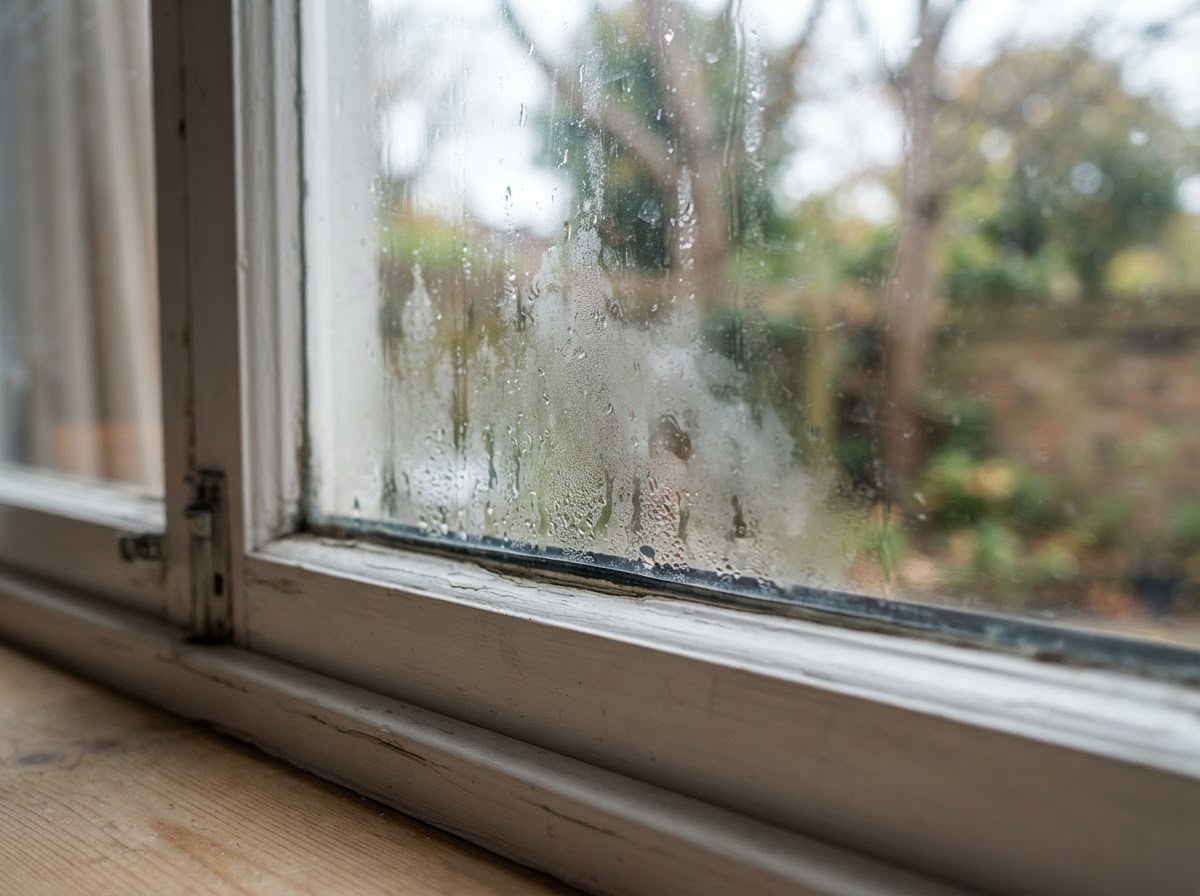
An insulated glass unit commonly contains multiple panes separated by a sealed space. Moisture visible between those panes raises a different question from water collecting on the room-facing or outdoor surface. Andersen's condensation guidance distinguishes these locations. Indoor surface condensation occurs when moisture in the air meets sufficiently cool glass. Exterior surface condensation can occur under suitable outdoor conditions. Moisture between panes can indicate a problem with the insulated glass unit's seal. The location matters because the next steps differ. Interior condensation may call for a discussion about indoor moisture, ventilation and surface temperatures. Between-pane fogging may call for a window professional to assess the glass unit. Neither observation alone establishes that the whole wall leaks or that every window needs replacement. Avoid diagnosing the location from a distant listing photograph. Reflections, dirt, applied films and lighting can be misleading. Ask the inspector to document what was visible and whether the observation was conclusive.
A clear window is not a seal certificate
Some symptoms are easier to see under particular weather and lighting conditions. A visual inspection captures the conditions present during the appointment. An absence of visible fogging does not establish the long-term integrity of every insulated glass seal. The NYS home-inspection standards set out a representative approach to accessible windows and doors and do not require determining insulated-glass seal integrity. STS's buyer-inspection information should be read with the actual agreement and access conditions for the property. If the seller reports intermittent fogging, ask for its location and timing. A photograph can help a window professional understand the history without replacing an on-site evaluation. Keep the distinction clear between an issue observed by the inspector and one reported by the seller.
Operation involves more than whether something opens
A sash is the movable frame holding the glass in many windows. Its hardware, balance mechanisms, tracks and surrounding frame affect operation. Doors similarly depend on hinges or rollers, latches, thresholds and frame alignment. An inspector may observe binding, damaged hardware, difficulty latching, incomplete closure or deterioration. These findings should identify the particular opening. “Windows are old” provides much less information than a room-by-room description of the units checked and their observed concerns. Do not force a stuck sash or door. Paint, damaged components or an unfamiliar locking mechanism can restrict operation. A qualified contractor can investigate without turning an inspection into a repair attempt. If a window is obstructed by furniture or fitted coverings, arrange authorized access before the appointment where practical.
Sticking does not identify a single cause
A door can bind because of hardware, alignment, moisture-related material changes, installation details or movement elsewhere in the building. The symptom becomes more informative when considered with nearby cracks, floor conditions, frame shape and documented changes over time. That does not mean every sticking door is structural. It also does not justify dismissing a recurring pattern as “just humidity” without supporting evidence. Ask what related conditions were observed and whether a carpenter, window specialist or engineer should evaluate the concern. For a purchase, request the history of adjustments. Repeated shaving of a door or repeated hardware changes may be relevant even if it operates during the appointment. The record helps a professional investigate the underlying cause; it does not establish one by itself.
Compare the symptoms before choosing a repair
This table is a routing tool. It is not a remote diagnosis or a replacement specification. Use the table to ask for an explanation tied to the opening. Replacing weatherstripping may address one air path but will not establish that concealed flashing is satisfactory. Replacing a glass unit may address fogging without changing the surrounding frame's condition.
Drafts need a location, not a savings promise
A draft can be associated with a worn seal, incomplete closure, a gap at the frame or another nearby air path. A buyer's sensation during a showing is a useful concern to report, but it does not measure annual energy loss. Ask whether the inspector observed a visible gap, deteriorated seal or operating problem. A window contractor or an appropriately scoped building-performance evaluation may help when the question requires more than a visual observation. Keep repair decisions tied to identified conditions and the household's goals. No responsible inspection article should promise that new windows will pay for themselves or deliver a fixed percentage reduction in bills. Actual outcomes depend on the existing building, replacement product, installation, climate and use. Comfort, operation, maintenance and appearance can matter even when financial savings have not been established.
The perimeter can matter as much as the glass
Windows and doors intersect the exterior wall. Visible joints, trim, sills and adjacent finishes can provide clues about condition, but the drainage and flashing details behind them may be concealed. A neat bead of sealant does not reveal how the assembly manages water behind the cladding. If staining or deterioration is present, ask what is visible and what remains unknown. A specialist may recommend further investigation, but any invasive work requires an agreed scope and the owner's authorization. A buyer should not remove trim during a showing to look behind it. Long Island buyers may encounter a mixture of original windows, replacement units and later additions in the same home. Ask for installation records by group or location. A warranty for recently replaced front windows should not be read as documentation for every opening in the building.
Build a window and door handover list
Request product information and service records where available. Useful entries include the manufacturer, model or series, installation date, installer, warranty terms and any known operating issues. Record which openings each document covers. Ask whether warranty rights transfer and who can answer that question. The manufacturer or installer should confirm the actual terms; neither a seller's assurance nor a home inspection establishes coverage. Older or unidentifiable units may still be serviceable, but parts availability is a practical question for a specialist. Illustrative scenario: two bedroom windows show between-pane haze, while a bathroom window has moisture only on the indoor surface after use. These observations should not be grouped into one “fogged windows” repair item. They may require different evaluations and different corrections. Review STS's sample-report landing page to understand the kind of location-specific reporting to ask about, then discuss the actual inspection scope directly. Request clear documentation of any openings that could not be operated or observed.