
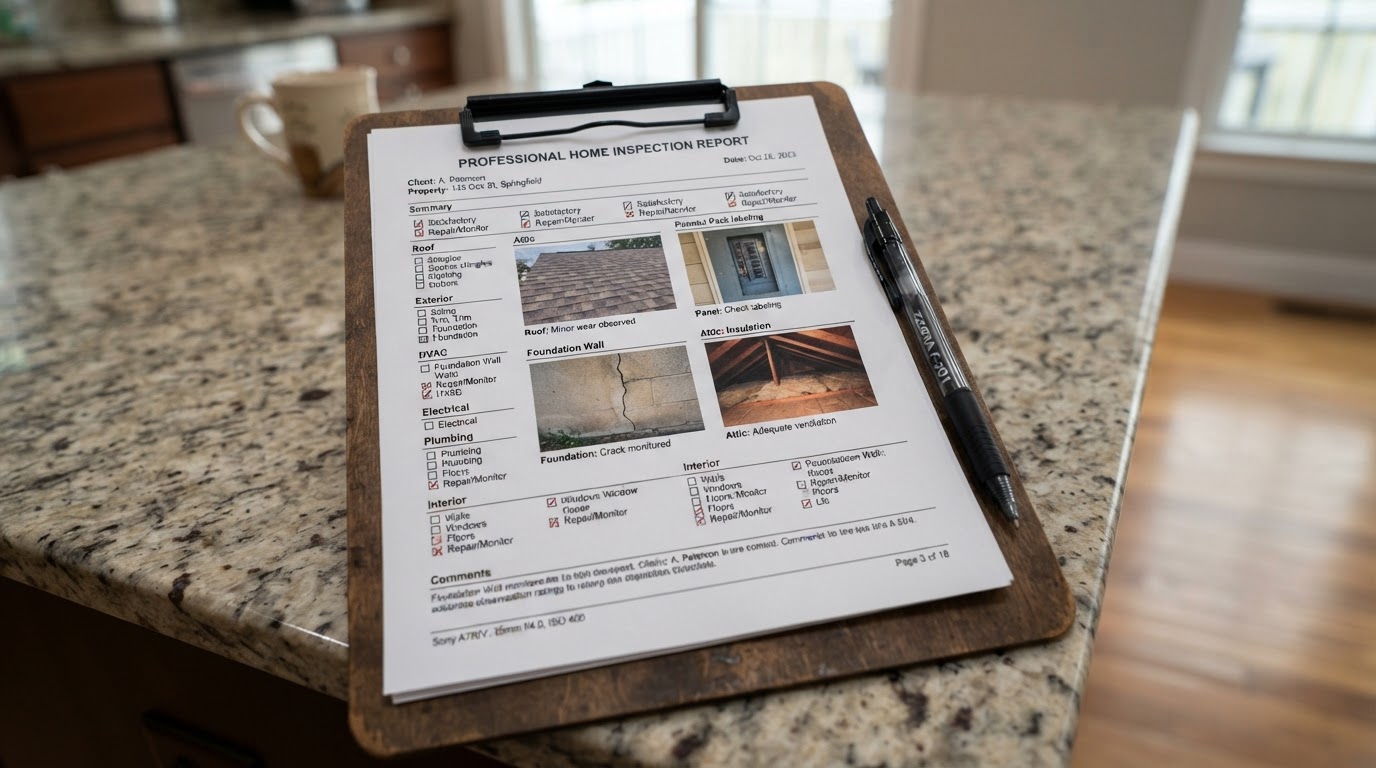
The example is hypothetical. Notice how it avoids jumping from “water observed” to a claim about the condition of every hidden surface. That distinction helps you seek the right follow-up without overstating the evidence. A photograph should support the written observation, but it may not explain everything by itself. A close-up can be difficult to locate later. Ask for clarification if you cannot connect the photograph to the room, equipment, or component described.
Read labels in the context of that report
Different companies use different category names, colors, and symbols. “Maintenance,” “recommendation,” “repair,” “monitor,” and “further evaluation” are not necessarily standardized severity grades. Maintenancegenerally describes upkeep intended to preserve operation or condition. Repair describes corrective work. Further evaluationmeans another professional or additional access is needed to establish the extent, cause, or suitable correction. Monitorshould lead to an understandable observation plan: what to watch, under which conditions, and when to seek help. A label cannot carry the entire meaning. Read the sentence explaining why the inspector recommended action. If the stated concern and category seem inconsistent, ask the inspector to reconcile them rather than guessing which one controls. You can preview the presentation through the STS sample-report page. Focus on clarity and next steps rather than expecting a report from another property to predict your home’s condition.
Prioritize using consequence and uncertainty
An inspection does not need to produce a single “pass” or “fail.” A more useful approach is to group the next actions. These are illustrative categories, not STS severity rules. A maintenance issue can become urgent under particular circumstances. An older component can continue working. A component with little visible information can still warrant follow-up because the consequence of being wrong is substantial. Keep “expensive” and “unsafe” separate. Some safety corrections are limited in scope. Some large expenses involve an aging system rather than an immediate hazard. Contractors can help establish costs after evaluating the actual work.
Build a follow-up sheet you can use
Create one row for each unresolved item that matters to your decision. Include the report reference, exact question, responsible professional, appointment date, answer received, and remaining uncertainty. For example, “roof concern” is too broad. “Roofer to evaluate flashing at the rear chimney, identify the source of adjacent staining, and provide a written correction proposal” gives the visit a purpose. The contractor may conclude that additional access or testing is necessary; that is useful information too. For an area not inspected, record what would allow it to be evaluated. That might be seller removal of storage, restoration of utilities by an appropriate professional, or a scheduled return when seasonal equipment can operate. Do not change “not inspected” to “satisfactory” just because the seller says it works. If an additional property feature falls outside the original inspection, the STS services overview can help frame a scope discussion. Confirm availability and deliverables before assuming the original report addresses that feature.